


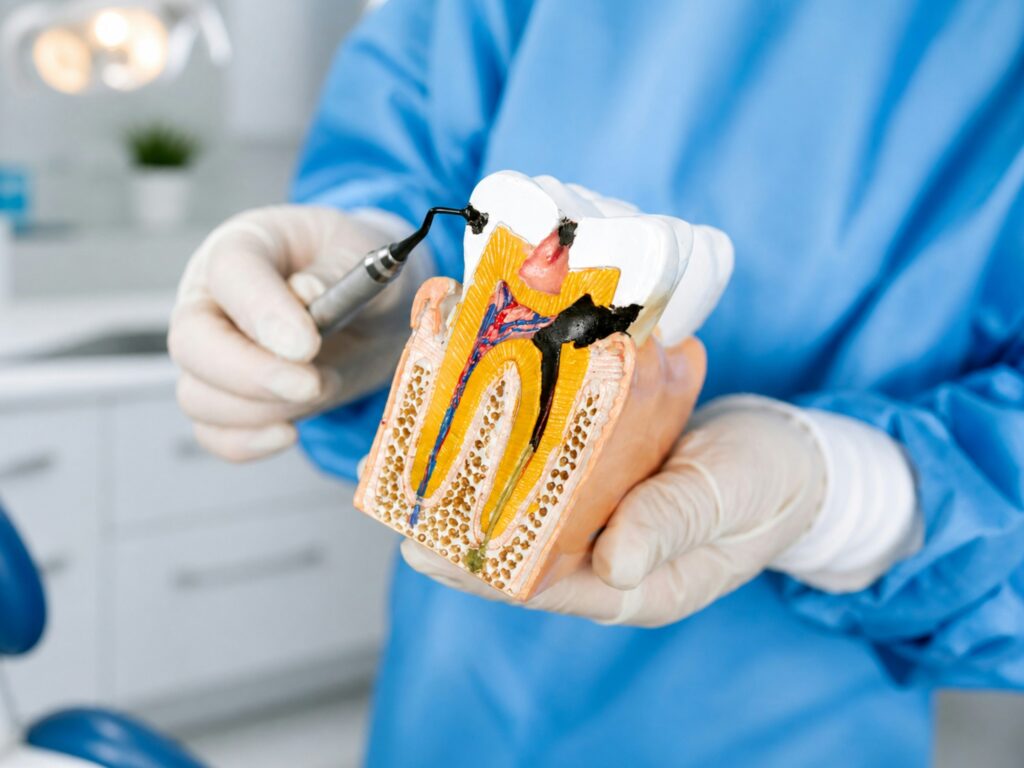
Yes, a tooth with an infection can often be treated successfully with root canal therapy. In fact, the main purpose of a root canal is to remove infection from inside the tooth, relieve discomfort, and help preserve your natural tooth.
When bacteria reach the inner pulp of a tooth due to deep decay, cracks, or injury, the pulp can become infected. Root canal treatment allows your dentist to clean and disinfect the inside of the tooth while keeping the outer structure intact.
At PoCo Dental Group, we provide comfortable root canal therapy using modern techniques and advanced technology to help patients restore their oral health and protect their natural smiles.
How Does a Root Canal Treat an Infected Tooth?
Inside every tooth is a soft area called the pulp, which contains nerves and blood vessels. When this area becomes infected, the tooth may become painful or sensitive.
During root canal treatment, your dentist:
Removes the Infected Pulp
The infected or damaged tissue inside the tooth is carefully removed to eliminate the source of the problem.
Cleans and Disinfects the Root Canals
The small canals inside the tooth are thoroughly cleaned to remove bacteria and prepare the tooth for sealing.
Seals the Tooth
The cleaned canals are filled and sealed to help protect the tooth from future infection.
Restores the Tooth
A filling or dental crown may be placed to strengthen the tooth and restore normal function.
This process allows the tooth to remain in place while addressing the infection.
What Are the Signs of an Infected Tooth?
A tooth infection can present in different ways. Some common signs include:
- Persistent tooth pain
- Sensitivity to hot or cold temperatures
- Pain when chewing or biting
- Swollen or tender gums
- Tooth discoloration
- A small bump on the gums
- Discomfort around a specific tooth
If you notice these symptoms, a dental examination can help determine whether root canal therapy is the right treatment.
Can a Root Canal Treat an Abscessed Tooth?
Yes, root canal therapy is often used to treat an abscessed tooth. A dental abscess occurs when bacteria and infection build up around or inside a tooth.
By removing the infected pulp and cleaning the root canals, root canal treatment helps address the source of the infection while preserving the natural tooth.
Your dentist may also recommend additional care depending on the condition of the tooth and surrounding tissues.
Is It Better to Treat an Infected Tooth or Remove It?
Whenever possible, saving your natural tooth is usually the preferred option. Root canal therapy allows you to keep your tooth while removing the infection.
Benefits of saving your natural tooth include:
- Maintaining your natural bite
- Preserving chewing ability
- Supporting proper alignment of surrounding teeth
- Avoiding the need for tooth replacement procedures
Extraction may be considered if a tooth cannot be restored, but root canal treatment provides an opportunity to protect and maintain your natural smile.
Is Root Canal Treatment Painful on an Infected Tooth?
Many patients worry that treating an infected tooth will be painful. However, modern root canal therapy is designed to keep patients comfortable.
Before treatment begins, local anesthesia is used to numb the area. Most patients feel little to no discomfort during the procedure.
After treatment, mild sensitivity or tenderness may occur as the tooth heals, but many patients experience relief from the pain caused by the infection.
Can I Wait to Get a Root Canal if My Tooth Is Infected?
When a tooth infection is diagnosed, timely treatment is important. Root canal therapy helps remove the source of infection and protect the tooth from further problems.
Early treatment can help:
- Relieve discomfort
- Protect surrounding teeth and tissues
- Improve the chances of saving the tooth
- Restore normal dental function
Your dentist can evaluate your tooth and recommend the best treatment plan based on your specific condition.
How Does a Dentist Know If an Infected Tooth Needs a Root Canal?
Your dentist will perform a detailed examination to determine whether root canal therapy is appropriate.
This may include:
Digital X-Rays
X-rays help identify infection around the tooth roots and evaluate the condition of surrounding structures.
Tooth Examination
Your dentist will check for signs of decay, cracks, sensitivity, and other concerns.
Pulp Testing
Testing helps determine the health of the tooth’s inner pulp and whether root canal treatment is needed.
Can Antibiotics Treat an Infected Tooth Instead of a Root Canal?
Antibiotics may sometimes be recommended to support treatment, especially when there is swelling or a spreading infection. However, they do not remove the infected tissue inside the tooth.
Root canal therapy addresses the source of the infection by cleaning and sealing the inside of the tooth.
Treat an Infected Tooth With Root Canal Therapy at PoCo Dental Group
A tooth infection does not always mean you need an extraction. In many cases, root canal therapy can successfully remove infection, relieve pain, and help you keep your natural tooth.
At PoCo Dental Group, our experienced dental team provides gentle and effective root canal treatment in Port Coquitlam using modern technology and a patient-focused approach.
If you have tooth pain, sensitivity, or signs of infection, schedule a consultation with PoCo Dental Group today to find out how root canal therapy can help restore your healthy smile.