


Losing a tooth can affect more than your smile. A missing tooth may make chewing difficult, affect the way nearby teeth fit together, and impact your confidence. Fortunately, modern dentistry offers several options for replacing missing teeth, with dental bridges and dental implants being two of the most common choices.
But which one is better? The answer depends on factors such as your oral health, jawbone condition, budget, treatment timeline, and long-term goals. Understanding the differences between dental bridges and implants can help you have a more informed conversation with your dentist about the right option for your smile.
What Is a Dental Bridge?
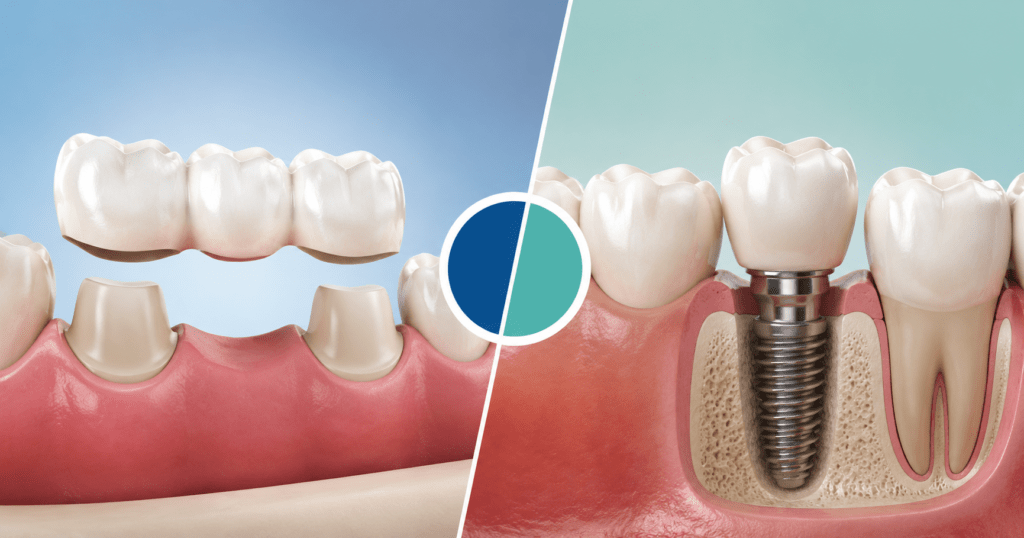
A dental bridge is a fixed restoration used to replace one or more missing teeth. It typically consists of an artificial tooth, called a pontic, supported by dental crowns attached to the natural teeth next to the gap.
Unlike a removable partial denture, a dental bridge is fixed in place and does not need to be taken out for daily use. It can restore your ability to chew and help maintain the appearance of your smile.
A traditional dental bridge generally requires the supporting teeth to be prepared so crowns can be placed over them. Your dentist will evaluate the condition and strength of these teeth before recommending a bridge.
What Is a Dental Implant?
A dental implant replaces a missing tooth from the root upward. A small titanium implant is surgically placed into the jawbone, where it can integrate with the surrounding bone. Once healing is complete, an abutment and dental crown are attached to the implant.
Because the implant is anchored into the jawbone, it provides a stable foundation for the replacement tooth. It also does not require the neighbouring natural teeth to be used as supports.
Dental implants can be used to replace a single missing tooth or as part of a larger tooth replacement plan.
Dental Bridge vs. Dental Implant: Key Differences
Although both treatments can replace missing teeth, they work differently.
1. Treatment Process
A dental bridge can often be completed relatively quickly. Your dentist prepares the supporting teeth, takes impressions or digital scans, and places the bridge once it has been fabricated.
Dental implants generally require more stages. The implant must be placed into the jawbone and allowed time to heal before the final restoration is attached. If there is insufficient bone, bone grafting may sometimes be recommended before or during implant treatment.
2. Effect on Neighbouring Teeth
One important difference is how each option interacts with your surrounding teeth.
A traditional bridge relies on neighbouring teeth for support. These teeth usually need to be reshaped to accommodate the crowns.
A dental implant is independently supported by the jawbone. This means the adjacent natural teeth generally do not need to be modified simply to support the replacement tooth.
3. Jawbone Preservation
When a natural tooth is lost, the area of the jawbone that previously supported the tooth may gradually lose volume because it is no longer stimulated by a tooth root.
Dental implants are designed to replace the tooth root and can help maintain the bone around the implant site.
A traditional bridge replaces the visible portion of the missing tooth but does not replace the natural root. Therefore, it does not provide the same type of stimulation to the underlying bone.
4. Longevity and Maintenance
Both dental bridges and implants can provide long-term tooth replacement when properly cared for. However, their maintenance requirements differ.
A bridge requires careful brushing and cleaning around and underneath the artificial tooth. Special flossing tools or interdental cleaners may make it easier to keep the area clean.
Dental implants also require regular brushing, flossing, and professional dental check-ups. Although the implant itself cannot develop a cavity, the surrounding gum tissue can still be affected by inflammation and infection if oral hygiene is inadequate.
5. Cost
The initial cost of a dental bridge is often lower than that of a dental implant. However, the total cost can vary significantly depending on the number of teeth being replaced, the materials used, and the additional procedures required.
An implant may have a higher upfront cost because treatment can involve surgery, the implant itself, an abutment, and a crown. Your dentist can provide a personalized estimate after assessing your oral health.
Also Read: Caring for Your Dental Implants: Maintenance Tips for Longevity
Which Option Is Better?
There is no single answer that applies to everyone.
A dental bridge may be a suitable option if you want to replace a missing tooth without undergoing implant surgery, need a relatively quick treatment, or have neighbouring teeth that already require crowns.
A dental implant may be a better option if you want an independent tooth replacement that does not rely on neighbouring teeth and are a suitable candidate for implant surgery.
Your jawbone health, gum health, medical history, bite, and overall oral condition all play a role in determining which treatment is appropriate.
How Do You Choose Between a Dental Bridge and Implant?
The best way to decide is to schedule a dental examination. Your dentist can assess the missing-tooth area, examine your neighbouring teeth and gums, and use dental X-rays or other imaging when needed.
You can also discuss important factors such as treatment time, expected longevity, maintenance, and cost. In some situations, either option may work well, while in others, one treatment may offer clear advantages.
Restore Your Smile With the Right Tooth Replacement
A missing tooth does not have to affect your ability to eat, speak, or smile with confidence. Dental bridges and dental implants can both provide effective solutions, but the right choice depends on your individual oral health and long-term needs.
If you are considering replacing a missing tooth, PoCo Dental Group can assess your smile and discuss your tooth replacement options. A personalized evaluation can help you understand whether a dental bridge, dental implant, or another treatment is right for you.
FAQs: Dental Bridge vs. Dental Implant
Is a dental bridge better than a dental implant?
Neither option is automatically better. Dental implants can provide an independent, long-term tooth replacement, while dental bridges may offer a faster and more affordable solution. Your dentist can recommend the most suitable option based on your oral health and needs.
Which lasts longer, a dental bridge or an implant?
Both can last for many years with proper care. Dental implants are generally designed as a long-term tooth replacement, while the lifespan of a bridge depends on factors such as oral hygiene, supporting teeth, and regular dental care.
Is a dental implant more expensive than a dental bridge?
Dental implants typically have a higher initial cost because treatment involves implant placement and a dental crown. A bridge may have a lower upfront cost, but the total price depends on the number of teeth involved and the treatment required.
Is getting a dental implant more painful than getting a bridge?
Dental implant placement involves a surgical procedure and may cause some discomfort during the healing period. A dental bridge does not require implant surgery. Your dentist can explain what to expect and discuss ways to keep you comfortable throughout treatment.
Can a dental bridge replace one missing tooth?
Yes. A dental bridge can replace a single missing tooth by placing an artificial tooth between crowns supported by neighbouring teeth. Your dentist will assess the surrounding teeth to determine whether they are suitable for supporting a bridge.
How do I know whether I need a dental bridge or implant?
Your dentist will consider your gum health, jawbone condition, neighbouring teeth, bite, overall oral health, treatment preferences, and budget. A dental examination and appropriate imaging can help determine which option is most suitable.