

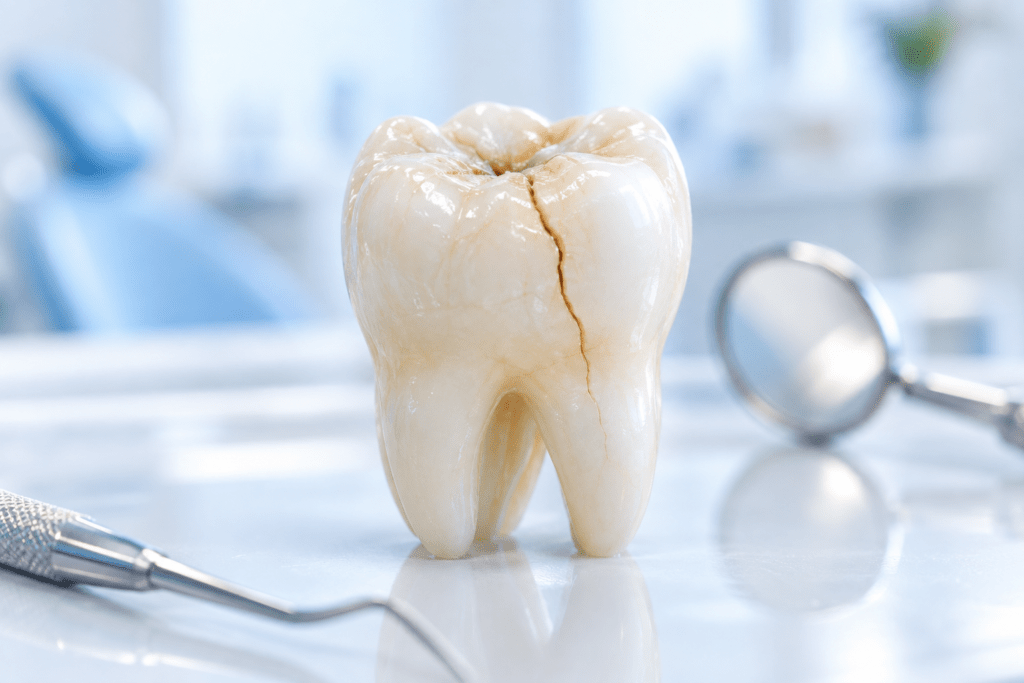
A cracked tooth can be easy to dismiss, especially when the damage looks small or the pain comes and goes. You may notice a sharp sensation when biting into food, sensitivity to cold drinks, or discomfort that disappears after a few minutes. It can be tempting to wait and see if the tooth settles down.
However, a crack can become more serious over time. Some cracks can extend deeper into the tooth, affecting the inner pulp and potentially leading to infection. The American Association of Endodontists recommends having a suspected cracked tooth assessed promptly because early treatment can improve the chances of protecting the tooth.
If you have noticed a crack and are looking for a dentist in Port Moody, our team can assess the tooth, determine the extent of the damage, and discuss the most appropriate treatment.
Is a Cracked Tooth a Dental Emergency?
Not every cracked tooth requires a trip to the emergency room, but it should not be ignored.
A small crack without pain may not require immediate emergency treatment, but it still deserves a dental assessment. More significant cracks, particularly those associated with severe pain, swelling, bleeding, or damage to the inner portion of the tooth, may require urgent dental care.
The Canadian Dental Association advises patients with broken teeth to contact their dentist and explain what happened so they can be seen promptly.
The sooner we can examine a damaged tooth, the sooner we can determine what is happening and help prevent the problem from progressing.
What Does a Cracked Tooth Feel Like?
Cracked teeth can produce different symptoms depending on the location and depth of the crack. Some people experience very little discomfort, while others develop noticeable pain.
Common signs include:
- Sharp pain when biting or chewing
- Pain when releasing your bite
- Sensitivity to hot or cold foods and drinks
- Pain that comes and goes
- Discomfort when eating certain foods
- Swelling around the affected tooth
- A visible crack or damaged area
- A chipped portion of the tooth
- Pain that develops without an obvious cause
One of the challenging aspects of cracked teeth is that the symptoms may not be constant. The American Association of Endodontists notes that pain from a cracked tooth can be unpredictable and may occur during chewing or when the tooth is exposed to temperature changes.
That means the absence of pain does not necessarily mean the tooth is healthy.
Also Read: Can Patients Get Dental Implants If They Smoke or Have Diabetes?
When Should You Seek Urgent Dental Care?
Some symptoms indicate that you should contact a dental office promptly rather than waiting for your next routine appointment.
Severe or Increasing Tooth Pain
Severe or worsening pain can indicate that the crack has affected the inner tissues of the tooth. A cracked tooth can eventually irritate or damage the pulp, which contains nerves and blood vessels.
Facial or Gum Swelling
Swelling around the tooth, gums, jaw, or face can be a sign of infection. Facial swelling accompanied by difficulty breathing or swallowing requires emergency medical attention.
A Large Piece of the Tooth Has Broken
A significant fracture can expose sensitive inner tooth structures and leave the tooth more vulnerable to additional damage. Contact your dentist as soon as possible.
The Tooth Becomes Extremely Sensitive
Strong sensitivity to hot or cold may occur when a crack reaches deeper layers of the tooth. Persistent or intense sensitivity should be evaluated rather than managed at home.
You Experienced a Dental Injury
A crack caused by a fall, sports injury, accident, or blow to the mouth should be assessed promptly. Dental injuries can sometimes involve damage that is not immediately obvious.
Can a Cracked Tooth Get Worse?
Yes. A crack can gradually extend as the tooth continues to experience pressure from chewing.
Unlike a broken bone, a tooth does not heal itself once it has developed a structural crack. The type, location, and depth of the crack determine the potential treatment and prognosis.
If the crack reaches the pulp, treatment such as root canal therapy followed by a crown may be considered. If a crack extends below the gum line, saving the tooth may not be possible.
This is one reason we recommend having a suspected crack examined instead of waiting for symptoms to become severe.
What Should You Do Before Your Appointment?
If you suspect that you have cracked a tooth, there are a few simple steps you can take while waiting to be assessed.
Avoid Chewing on the Damaged Tooth
Try to use the opposite side of your mouth when eating. Hard or crunchy foods can put additional pressure on the cracked area.
Choose Softer Foods
Soft foods can reduce the amount of force placed on the affected tooth while you wait for dental care.
Rinse Your Mouth
If the tooth was damaged during an accident or injury, gently rinsing your mouth with warm water can help clean the area. The American Dental Association also recommends a cold compress on the face to help reduce swelling following a cracked tooth.
Protect the Area
If a sharp edge is irritating your cheek or tongue, avoid touching it with your fingers or attempting to reshape the tooth yourself.
Do Not Try to Repair the Tooth at Home
Dental cement, household glue, filing, or other DIY repairs can cause additional damage. A cracked tooth needs to be assessed professionally so the underlying problem can be identified.
How Is a Cracked Tooth Treated?
There is no single treatment for every cracked tooth. Our approach depends on the location and severity of the crack, the condition of the tooth, and whether the pulp has been affected.
Treatment may include:
Dental Filling or Bonding
A minor fracture or damaged area may sometimes be repaired with a tooth-coloured filling or bonding material.
Dental Crown
A crown can cover and protect a damaged tooth when enough healthy tooth structure remains. The goal is to restore function while helping protect the tooth from further damage.
Root Canal Treatment
If the crack has affected the pulp and the tooth can still be restored, root canal treatment may be recommended before placing a protective restoration. The Canadian Dental Association notes that serious breaks may require root canal treatment and a crown.
Tooth Extraction
If the crack extends too deeply or the tooth cannot be predictably restored, extraction may be necessary. We can discuss replacement options when appropriate.
What Causes Teeth to Crack?
Cracked teeth can develop for several reasons. Some happen suddenly, while others develop gradually as teeth experience repeated pressure.
Common causes include:
- Biting down on hard foods
- Chewing ice or hard candy
- Teeth grinding or clenching
- Dental trauma
- Large fillings that have weakened the tooth
- Normal wear over time
- Using teeth to open packages or bite hard objects
The Canadian Dental Association specifically recommends avoiding hard objects and foods such as ice, popcorn kernels, and hard candy to reduce the risk of dental injuries.
Can You Prevent a Cracked Tooth?
You cannot prevent every dental injury, but you can reduce some common risks.
Avoid chewing ice and other very hard objects. If you participate in contact sports or activities where your mouth could be injured, consider wearing a properly fitted mouthguard.
If you grind or clench your teeth, talk with our team. We can evaluate your teeth and discuss options that may help protect them from excessive forces.
Regular dental examinations are also useful because some cracks may not cause obvious symptoms. Routine appointments allow us to monitor your teeth and identify concerns before they become more complicated.
Why Prompt Dental Care Matters
A cracked tooth may start with a small amount of discomfort, but delaying an assessment can allow the damage to progress. Once a crack reaches the inner portion of the tooth, treatment can become more involved.
Prompt evaluation does not necessarily mean you will need extensive treatment. The appropriate approach depends on what we find during the examination.
Our priority is to understand the condition of the tooth, relieve discomfort when possible, and recommend treatment that protects your oral health.
Looking for a Dentist Near Port Moody?
If you have noticed a crack, sudden sensitivity, or pain when biting, our team can help determine what is causing the problem.
At PoCo Dental Group, we provide comprehensive dental care for patients in Port Coquitlam, Port Moody, Maple Ridge, Coquitlam, and surrounding communities. Our team focuses on diagnosing dental concerns early and providing treatment based on each patient’s individual needs.
If you think you have a cracked tooth, contact our team to arrange an assessment rather than waiting for the symptoms to become more severe.
Frequently Asked Questions
Can a cracked tooth heal on its own?
No. A structural crack in a tooth does not heal like a broken bone. However, the appropriate treatment can help protect the tooth and restore its function, depending on the type and extent of the crack.
Can I wait if my cracked tooth does not hurt?
A painless crack may not require emergency treatment, but it should still be assessed by a dentist. Some cracks produce few symptoms while continuing to progress.
Is a cracked tooth always an emergency?
No. The urgency depends on the severity of the damage and symptoms. Severe pain, swelling, significant tooth damage, or signs of infection warrant prompt attention. A small, painless crack should still be evaluated rather than ignored.
Can a cracked tooth cause an infection?
Yes. If a crack reaches the inner pulp, bacteria can enter and potentially contribute to infection. A deeper crack may eventually cause pain, swelling, or other signs of infection.
What should I eat with a cracked tooth?
Choose softer foods and avoid chewing on the affected side. Hard, crunchy, sticky, or chewy foods can place additional pressure on the damaged tooth.
Do I need a crown for a cracked tooth?
Not every cracked tooth requires a crown. Treatment depends on the type, location, and severity of the crack. A crown may be recommended when additional protection is needed to restore and protect the tooth.