
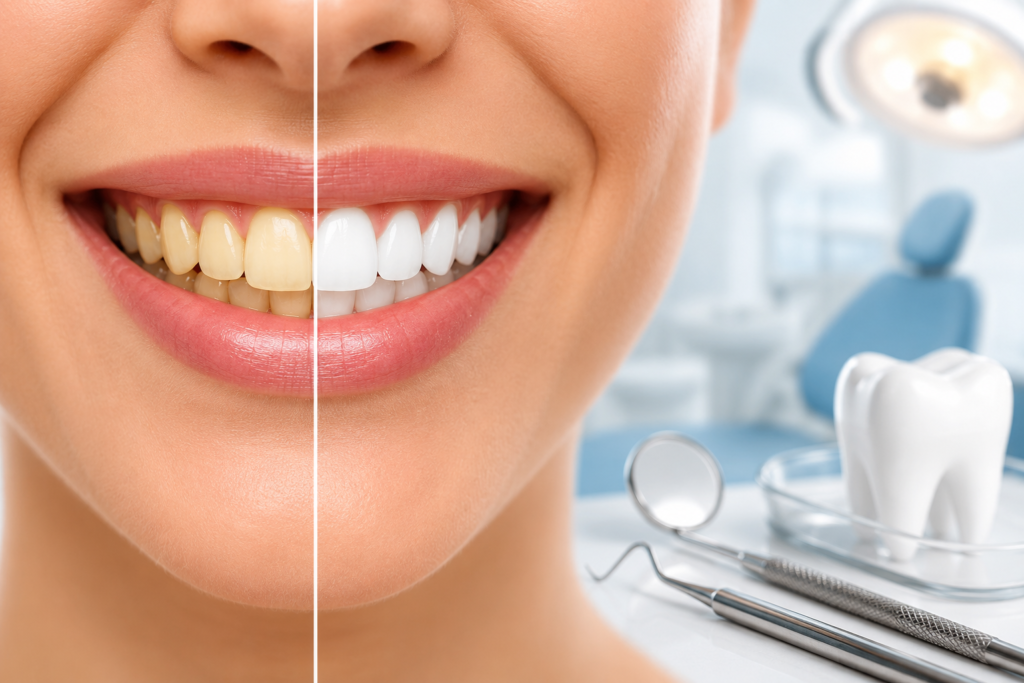
A bright, white smile is often associated with confidence, health, and good oral hygiene. However, many people notice their teeth becoming yellow over time, even when they brush regularly. Tooth discoloration is extremely common and can happen for several reasons, including aging, food habits, smoking, medications, and poor oral care. The good news is that yellow teeth can often become white again with the right dental treatments and healthy habits.
Modern dentistry offers several safe and effective solutions to restore the natural brightness of teeth. From professional teeth whitening treatments to deep cleanings and cosmetic procedures, dentists can help patients achieve a cleaner and more confident smile. Understanding why teeth turn yellow and how dental professionals treat the problem can help you choose the best option for your oral health needs.
Why Do Teeth Turn Yellow?
Teeth are naturally covered by a protective outer layer called enamel. Although enamel is strong, it can gradually wear down over time, revealing the yellowish dentin underneath. In many cases, yellow teeth are caused by surface stains that build up on the enamel due to lifestyle habits.
Some of the most common causes of yellow teeth include:
Food and Drinks
Certain foods and beverages contain pigments that stain teeth. Coffee, tea, red wine, cola, berries, tomato sauces, and curry are common contributors to discoloration. Frequent consumption without proper cleaning allows stains to settle deeply into the enamel.
Smoking and Tobacco Use
Nicotine and tar found in cigarettes and tobacco products can quickly stain teeth yellow or brown. Tobacco stains are often stubborn and difficult to remove with regular brushing alone.
Poor Oral Hygiene
Skipping brushing and flossing allows plaque and tartar to build up on teeth. Over time, this buildup can make teeth appear yellow and unhealthy.
Aging
As people age, enamel naturally becomes thinner. This exposes more dentin, which has a naturally yellow appearance. Aging is one of the most common reasons for tooth discoloration.
Certain Medications
Some antibiotics, antihistamines, blood pressure medications, and chemotherapy treatments can affect tooth color. Children who take tetracycline antibiotics during tooth development may also develop permanent discoloration.
Genetics
Some individuals naturally have thicker or whiter enamel than others. Genetics can influence the overall shade and brightness of teeth.
Can Yellow Teeth Become White Again?
In many cases, yes. Dentists can significantly improve the appearance of yellow teeth using professional treatments designed to remove stains and brighten enamel safely. The success of whitening depends on the type and severity of discoloration.
Surface stains caused by food, beverages, or smoking usually respond very well to professional whitening. Deeper internal stains may require more advanced cosmetic treatments such as veneers or bonding.
A dental examination is important because it helps determine the cause of discoloration and the most suitable treatment option.
Professional Dental Cleaning for Yellow Teeth
Sometimes, yellow teeth are not actually stained but covered with plaque and tartar buildup. A professional dental cleaning can make a noticeable difference in the appearance of teeth.
During a cleaning appointment, the dentist or dental hygienist removes hardened tartar and plaque using specialized instruments. They also polish the teeth to eliminate minor surface stains and smooth the enamel.
Professional cleanings help:
- Remove plaque and tartar
- Reduce surface discoloration
- Improve oral health
- Prevent gum disease
- Brighten the overall smile
For many patients, regular cleanings every six months help maintain naturally whiter teeth.
Professional Teeth Whitening Treatments
Professional teeth whitening is one of the most effective ways dentists help turn yellow teeth white again. Unlike store-bought products, professional whitening treatments use stronger whitening agents and are performed under dental supervision.
In-Office Teeth Whitening
In-office whitening treatments provide fast and noticeable results. The dentist applies a professional-grade whitening gel containing hydrogen peroxide or carbamide peroxide to the teeth. Sometimes a special light or laser is used to enhance the whitening process.
The procedure usually takes about one to two hours, and many patients notice their teeth becoming several shades whiter after just one visit.
Benefits of in-office whitening include:
- Quick results
- Safe and controlled treatment
- Even whitening
- Reduced tooth sensitivity
- Long-lasting improvement
Professional whitening is ideal for people with moderate to severe yellow staining.
Take-Home Whitening Kits from Dentists
Dentists may also provide customized take-home whitening kits. These kits include custom-made trays that fit comfortably over the teeth and professional whitening gel.
Patients wear the trays for a specific amount of time each day, usually for one to two weeks. Because the trays are customized, the whitening gel spreads evenly and produces better results than over-the-counter strips.
Benefits of professional take-home kits include:
- Convenience
- Gradual whitening
- Safer application
- Personalized treatment
- Better comfort and fit
Dental Bonding for Deep Stains
Some types of discoloration do not respond well to whitening treatments. In such cases, dental bonding may be recommended.
Dental bonding involves applying a tooth-colored resin material directly to the tooth surface. The dentist shapes and polishes the resin to improve the tooth’s appearance and cover deep stains.
Bonding is often used for:
- Deep discoloration
- Minor chips or cracks
- Uneven teeth
- Gaps between teeth
The procedure is relatively quick and affordable compared to other cosmetic treatments.
Porcelain Veneers for Severely Yellow Teeth
Porcelain veneers are thin custom-made shells placed over the front surface of teeth. They are commonly used when whitening treatments cannot remove severe discoloration.
Veneers provide a long-lasting cosmetic solution and can dramatically improve the appearance of teeth. They are stain-resistant and designed to look natural.
Dentists may recommend veneers for:
- Severe yellow or brown stains
- Enamel damage
- Uneven tooth shape
- Worn teeth
- Long-term smile enhancement
Although veneers are more expensive than whitening treatments, they offer highly durable and aesthetic results.
Crowns for Damaged or Discolored Teeth
If a tooth is both damaged and severely discolored, a dental crown may be the best option. Crowns completely cover the visible portion of the tooth and restore its appearance, strength, and function.
Crowns are commonly recommended when discoloration is linked to trauma, root canal treatment, or significant tooth decay.
Are Over-the-Counter Whitening Products Effective?
Many whitening toothpastes, strips, and mouthwashes claim to whiten teeth. While some products can help reduce mild surface stains, they usually do not produce dramatic results.
Over-the-counter products contain lower concentrations of whitening ingredients compared to professional dental treatments. Improper use can also lead to tooth sensitivity or gum irritation.
Professional dental guidance is important because not all whitening products are suitable for every patient.
How Long Do Whitening Results Last?
The longevity of whitening results depends on lifestyle habits and oral hygiene. Some patients maintain whiter teeth for several years, while others may need touch-up treatments sooner.
Results typically last longer when patients:
- Brush and floss daily
- Avoid smoking
- Limit staining foods and drinks
- Visit the dentist regularly
- Use whitening toothpaste occasionally
Drinking coffee or tea through a straw and rinsing the mouth with water after meals may also help reduce future staining.
Can Yellow Teeth Be Prevented?
Preventing yellow teeth is easier than treating severe discoloration later. Good oral hygiene and healthy habits play an important role in maintaining a brighter smile.
Here are some preventive tips:
Brush Properly Twice a Day
Use fluoride toothpaste and brush for at least two minutes twice daily. Proper brushing removes plaque before it hardens into tartar.
Floss Daily
Flossing removes food particles and plaque between teeth where toothbrushes cannot reach.
Limit Staining Foods and Drinks
Reducing coffee, tea, wine, and sugary beverages can help protect enamel from stains.
Quit Smoking
Avoiding tobacco products significantly improves oral health and reduces yellow staining.
Visit the Dentist Regularly
Routine dental checkups and cleanings help detect discoloration early and maintain healthy teeth.
Drink More Water
Water helps wash away food particles and acids that contribute to staining.
Is Teeth Whitening Safe?
Professional teeth whitening is generally considered safe when performed under dental supervision. Dentists evaluate oral health before treatment to ensure the teeth and gums are healthy enough for whitening.
Some patients may experience temporary tooth sensitivity after whitening, but this usually resolves within a few days.
People with gum disease, cavities, worn enamel, or dental restorations should consult their dentist before starting whitening treatment.
Choosing the Right Whitening Treatment
The best treatment depends on the cause of discoloration, oral health condition, and cosmetic goals. A dentist can recommend the most effective option after examining the teeth.
For example:
- Mild yellowing may improve with cleaning and whitening toothpaste
- Moderate staining often responds well to professional whitening
- Deep discoloration may require bonding or veneers
- Damaged teeth may need crowns
Professional advice helps ensure safe and long-lasting results.
Final Thoughts
Yellow teeth are a common concern, but they are often treatable with modern dental solutions. Maintaining good oral hygiene and avoiding staining habits can help preserve whitening results for years.
If you are looking for professional teeth whitening and cosmetic dental care, contact PoCo Dental Group today. Our experienced team can help you achieve a brighter, healthier-looking smile with personalized treatment options designed for your dental needs.
FAQs
1. Can yellow teeth become white again with professional dental treatment?
Yellow teeth can often become white again with professional dental treatments such as teeth whitening, dental cleanings, veneers, or bonding. Our team provides customized cosmetic dental solutions to help restore a brighter and healthier-looking smile.
2. What causes teeth to turn yellow over time?
Teeth may turn yellow because of coffee, tea, wine, smoking, aging, plaque buildup, or poor oral hygiene. Some medications and genetics can also affect tooth color.
3. Does professional teeth whitening work better than whitening toothpaste?
Yes, professional whitening treatments provide faster, safer, and more noticeable results compared to over-the-counter whitening toothpastes or strips.
4. Can smoking stains be removed from teeth?
In many cases, yes. Professional dental cleanings and whitening treatments can help reduce or remove tobacco stains from teeth.
5. Is teeth whitening safe for sensitive teeth?
Professional whitening is generally safe, even for patients with mild sensitivity. Your dentist may recommend customized whitening options to minimize discomfort.
6. Where can I get professional teeth whitening in Port Coquitlam?
If you are looking for professional teeth whitening in Port Coquitlam, you can visit PoCo Dental Group for customized cosmetic dental solutions. We offer safe and effective whitening treatments designed to brighten your smile while protecting your oral health.
7. How long do teeth whitening results last?
Results vary depending on lifestyle habits, but professional whitening can last several months to a few years with proper oral hygiene and regular dental visits.
8. Can yellow teeth be prevented?
Yes, brushing twice daily, flossing, avoiding smoking, and limiting staining foods and beverages can help prevent teeth from becoming yellow.
9. What if whitening treatments do not remove deep stains?
For severe or deep discoloration, dentists may recommend cosmetic treatments such as dental veneers or bonding to improve the appearance of teeth.
10. Why should I visit a dentist for yellow teeth?
A professional dental examination helps identify the exact cause of discoloration and ensures you receive the safest and most effective treatment for long-lasting results.