
A smile can change the way you feel about yourself, especially when you are unhappy with the appearance of one or more teeth. Discolouration, small chips, uneven tooth shapes, gaps, or teeth that appear slightly crooked can make some people feel less comfortable when they smile. Porcelain veneers are one cosmetic dentistry option that can address several of these concerns at the same time.
If you are considering porcelain veneers in Pitt Meadows, it is helpful to understand what the treatment involves before making a decision. Veneers are not simply thin coverings placed over the teeth. The process involves an examination, treatment planning, preparation of the teeth, custom fabrication, and careful placement.
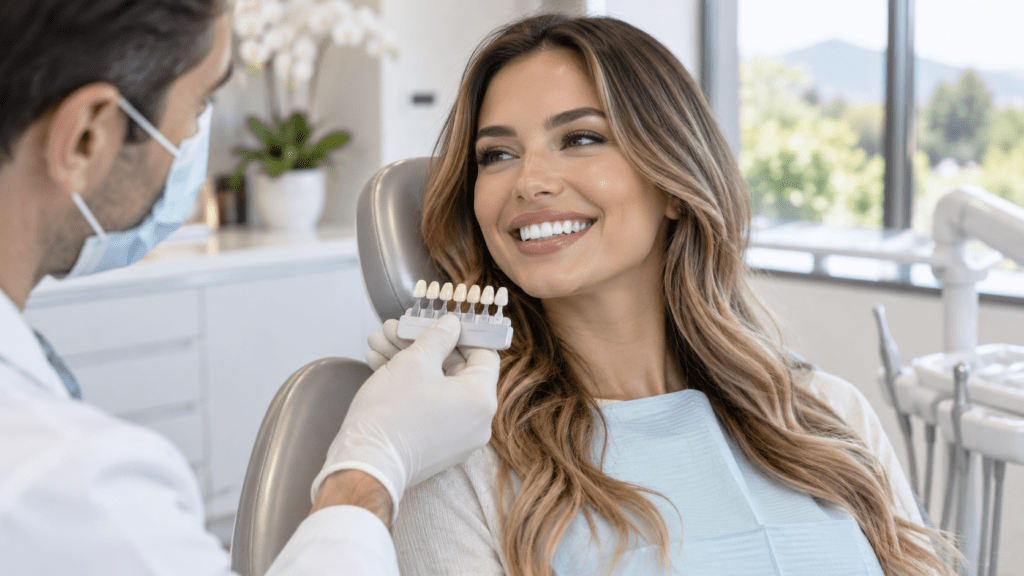
At PoCo Dental Group, the veneer process includes assessing the condition of the teeth, discussing the patient’s goals, taking images and impressions, and creating a mock-up to help patients understand what their proposed smile may look like. This planning stage is important because a natural-looking result depends on more than simply choosing a bright shade of porcelain.
What Are Porcelain Veneers?
Porcelain veneers are thin, custom-made shells designed to cover the visible front surface of a tooth. They are bonded to the teeth to change their appearance, including their colour, shape, size, or overall symmetry.
Because each veneer is made for an individual tooth, the treatment can be planned around the patient’s existing smile rather than using the same shape for everyone. The goal is generally to create a result that looks natural and works comfortably with the person’s bite.
Porcelain is also valued in cosmetic dentistry because it can provide a tooth-like appearance and is resistant to staining. However, veneers still require appropriate care. They are not a replacement for regular brushing, flossing, dental examinations, or other preventive dental care.
What Can Porcelain Veneers Fix?
One of the reasons people consider porcelain veneers is their ability to address several cosmetic concerns with one treatment. Depending on the condition of the teeth and the patient’s overall oral health, veneers may be considered for teeth that have noticeable discolouration, minor chips, irregular shapes, small gaps, or an uneven appearance.
They can also be used when a person wants to improve the overall balance of their smile. For example, a tooth that looks shorter or differently shaped from the surrounding teeth may be incorporated into a broader cosmetic treatment plan.
It is important to understand that veneers are primarily a cosmetic treatment. They do not replace treatment for active tooth decay or untreated gum disease. If a tooth has a dental problem that needs attention, that issue should generally be addressed before cosmetic treatment is considered.
Who Is a Good Candidate for Porcelain Veneers?
There is no single type of person who is automatically suitable for porcelain veneers. A dentist needs to examine the teeth and gums and consider the patient’s oral health, bite, expectations, and reasons for wanting treatment.
Someone may be considered for veneers when the main concern is the appearance of otherwise suitable teeth. People with discoloured teeth, small gaps, uneven tooth shapes, minor chips, or certain cosmetic alignment concerns may benefit from discussing veneers with a dentist.
Good oral health is an important part of the decision. Active decay, significant gum problems, or other dental conditions may need to be treated first. A dentist may also consider habits such as teeth grinding or clenching because excessive force can affect cosmetic dental work.
The consultation is therefore more than a discussion about how someone wants their smile to look. It is an opportunity to determine whether porcelain veneers are appropriate and whether another treatment may provide a better solution.
What Should You Expect at Your First Veneers Consultation?
The first appointment is an important part of the process because it establishes what can realistically be achieved.
At PoCo Dental Group, the initial assessment can include reviewing dental images and impressions, examining the teeth, and discussing the patient’s goals. The team also uses photographs and a mock-up to help patients visualize the planned result.
This discussion gives you an opportunity to explain what you like and dislike about your smile. You may want to change the colour of your teeth, improve the shape of certain teeth, close a small gap, or create a more balanced appearance.
It is also useful to ask questions at this stage. You can discuss how many veneers may be appropriate, whether any teeth need treatment first, how much enamel may need to be removed, what temporary veneers will feel like, and how you should care for the finished veneers.
A detailed consultation can help prevent unrealistic expectations and ensures that cosmetic treatment is planned around your individual smile.
How Are Porcelain Veneers Placed?
The porcelain veneers process usually takes more than one appointment because the veneers need to be custom-made.
During preparation, the dentist removes a small amount of enamel from the front of the tooth to create room for the veneer. The amount depends on the treatment plan and the shape and position of the tooth. Local freezing can be used during the preparation process to help keep the patient comfortable.
An impression or scan of the prepared teeth is then used to create the permanent veneers. While the final veneers are being made, temporary veneers may be placed.
Temporary veneers serve an important purpose, but they are not intended to function exactly like the final porcelain restorations. They can require some additional care, particularly when eating harder or sticky foods.
When the permanent veneers are ready, the temporary restorations are removed. The dentist checks the fit and appearance of the veneers before bonding them to the teeth. According to the treatment information provided by PoCo Dental Group, the final veneers are bonded individually using resin cement after the teeth are prepared for adhesion.
Will Porcelain Veneers Hurt?
Many people are concerned about discomfort before having their teeth prepared for veneers. The preparation involves removing a small amount of enamel, and local freezing can be used to make the procedure more comfortable.
After treatment, some people may experience temporary sensitivity, particularly to hot or cold foods and drinks. This can occur because the enamel has been reduced during preparation. PoCo Dental Group notes that significant recovery time is generally not expected after porcelain veneer placement, although some sensitivity can occur.
If you experience persistent pain, significant sensitivity, or another concern after treatment, contact your dental office rather than assuming that it is part of the normal adjustment period.
How Long Do Porcelain Veneers Last?
Porcelain veneers are designed to be durable, but they are not indestructible. Their lifespan can depend on several factors, including the quality of the restoration, the condition of the underlying teeth, oral hygiene, bite forces, and everyday habits.
PoCo Dental Group states that porcelain veneers are known to last for at least ten years and, in some cases, considerably longer.
How you treat your veneers also matters. Using your teeth to open packages, biting very hard objects, or repeatedly placing excessive force on the teeth can increase the risk of damage. Regular dental examinations can also help identify problems before they become more serious.
How Should You Care for Porcelain Veneers?
Veneers do not eliminate the need for normal dental care. The teeth underneath the veneers remain your natural teeth, so they can still develop decay or gum problems if they are not properly maintained.
Brush your teeth regularly with a soft toothbrush and fluoride toothpaste, and clean between your teeth every day. Continue attending regular dental examinations and professional cleanings as recommended by your dental team.
It is also sensible to be careful with habits that place unnecessary pressure on the teeth. If you regularly grind or clench your teeth, discuss this with your dentist. In some situations, a night guard may be considered to help protect teeth and dental restorations.
Porcelain is resistant to staining, but maintaining good oral hygiene is still important for keeping the entire smile looking healthy. The natural teeth surrounding veneers can change colour over time, which is another reason to discuss shade selection carefully before treatment.
Are Porcelain Veneers Permanent?
Porcelain veneers should be considered a long-term cosmetic treatment rather than a temporary change. Because some enamel is removed during preparation, the teeth may require a restoration after the veneers eventually need to be replaced.
This is an important point to understand before treatment. Veneers can provide a long-lasting cosmetic improvement, but they are not something that should be approached as a reversible procedure.
A consultation allows your dentist to explain what preparation is recommended for your teeth and whether porcelain veneers are the right choice for your goals.
Porcelain Veneers or Teeth Whitening: Which Is Better?
These treatments address different concerns.
Teeth whitening is designed to lighten the colour of natural teeth. It may be suitable when the main concern is tooth discolouration and the teeth are otherwise satisfactory in shape and position.
Porcelain veneers can address colour as well as certain concerns involving tooth shape, size, minor chips, small gaps, and overall appearance. They may therefore be considered when whitening alone would not provide the desired change.
The right option depends on what you want to change. If your teeth are healthy and you mainly want a brighter smile, whitening may be worth discussing. If you want to change both colour and the appearance of individual teeth, veneers may be another option.
Porcelain Veneers vs. Composite Veneers
Porcelain and composite veneers are not the same treatment.
Porcelain veneers are custom-made restorations that are fabricated before being bonded to the teeth. Composite veneers are created using tooth-coloured resin that is applied directly to the teeth.
Porcelain is known for its durability and resistance to staining, while composite treatment can involve a different process and may be suitable for certain situations. Your dentist can explain the advantages and limitations of each option based on your teeth, budget, cosmetic goals, and long-term expectations.
Why Treatment Planning Matters for a Natural-Looking Smile
A natural-looking smile is not simply about making teeth as white as possible. Tooth shape, size, position, proportions, and the relationship between the teeth all influence the final appearance.
This is why the planning stage matters. PoCo Dental Group describes using images and a mock-up during the consultation so patients can get an idea of the proposed result before the final veneers are made.
A good cosmetic treatment plan should also consider how the teeth function. Veneers need to fit comfortably with the patient’s bite and should not interfere with normal jaw movement.
How Soon Can You Return to Normal Activities?
One of the practical advantages of porcelain veneers is that there is generally little downtime after the final placement. PoCo Dental Group notes that there is usually very little recovery time, although temporary sensitivity may occur.
The temporary stage may require more care because temporary veneers are not the final restorations. Your dental team can provide specific instructions about eating, brushing, and other activities while you are waiting for the permanent veneers.
Once the final veneers have been bonded and your dentist has confirmed that everything fits properly, you can generally return to your usual routine while following the recommended care instructions.
Frequently Asked Questions About Porcelain Veneers in Pitt Meadows
How much do porcelain veneers cost in Pitt Meadows?
The cost varies from patient to patient. It can depend on the number of veneers required, the complexity of the treatment, laboratory costs, and whether other dental treatment is needed first. A consultation is the most reliable way to receive an estimate based on your individual treatment plan.
How long does it take to get porcelain veneers?
Porcelain veneers generally require more than one appointment because the teeth need to be assessed and prepared, impressions or scans need to be taken, and the permanent veneers need to be custom-made. Temporary veneers may be used while the final restorations are being prepared.
Do porcelain veneers look natural?
Yes. Porcelain veneers can be designed to closely resemble natural teeth. Their appearance depends on factors such as shape, size, shade, placement, and how they are planned in relation to the surrounding teeth.
Can porcelain veneers fix crooked teeth?
Veneers can sometimes improve the appearance of mildly uneven or slightly crooked teeth. They do not physically straighten the teeth in the same way as orthodontic treatment. If tooth position is a significant concern, your dentist may discuss orthodontic options such as Invisalign.
Can porcelain veneers cover gaps between teeth?
Veneers can be used in some cases to improve the appearance of small spaces between teeth. However, the cause and size of the gap should be assessed first. Orthodontic treatment or another approach may be more suitable in certain situations.
Can I get porcelain veneers if I have cavities?
Active tooth decay should generally be treated before cosmetic treatment. Your dentist will examine the teeth and determine whether any restorative or preventive treatment is needed before veneers are considered.
Do porcelain veneers stain?
Porcelain is resistant to staining, which is one of its advantages as a cosmetic material. However, maintaining good oral hygiene remains important, and the natural teeth around the veneers can still develop stains or discolouration.
How long do porcelain veneers last?
PoCo Dental Group states that porcelain veneers are known to last for at least ten years and may last longer depending on individual circumstances and care.
Do porcelain veneers require special care?
They do not require an entirely different dental routine. Regular brushing, cleaning between the teeth, professional dental care, and avoiding habits that place excessive force on the teeth are important for maintaining both the veneers and the natural teeth underneath them.
Are porcelain veneers right for everyone?
No. Suitability depends on your oral health, the condition of your teeth, your bite, cosmetic goals, and expectations. A dental examination is necessary to determine whether veneers are appropriate or whether another treatment would better address your concerns.